


Common Nonprofit Pain Points & How to Overcome Them
Monday, September 21, 2026 by Jon Osterburg
It’s no secret that running a nonprofit is challenging, no matter your organization’s size or mission. If you’ve been doing so for a while, you’ve probably investigated many possible solutions for your problems, potentially including outsourcing various functions like financial management.
But even though you may have heard about the general benefits of outsourcing—access to expertise, cost-effectiveness, more time to focus on your cause, etc.—it can be tricky to understand how partnering with external financial professionals can solve your problems. That’s why the Jitasa team has put together this guide to walk through some of the most common pain points that we help nonprofits resolve, including:
- Staff turnover
- Messy records
- Audit challenges
- Service provider changes
- Financial compliance
- Grant management
Let’s dive deeper into these pain points by addressing the questions we often receive about them and exploring how Jitasa’s outsourced bookkeeping, accounting, fractional CFO, and controller services can answer each one.

Access affordable, scalable, expert nonprofit accounting services by partnering with Jitasa.
Request a QuoteBefore we jump into the pain points, think about your own organization and use the list below to do a quick self-assessment. Click on the pain points you're currently experiencing, then take a moment to put them in order of your organization's priority. As you read through the rest of the article, you can take particular care while reviewing relevant sections. Save your answers in your personal notes as a reference for your internal team and potential outsourcing partners so that everyone is on the same page about what needs to be done.
Nonprofit Pain Point Inventory
Check off the challenges your nonprofit is facing to add them to your list, then drag them (or use the arrows) into order from most to least pressing.
Select your challenges
- You’ve added every challenge on the list.
Your challenges
- Review this section
- Check off a challenge above to add it here.
Your top priority
Save or print your list to share with your internal team and potential outsourcing partners so everyone is on the same page about what needs to be done.
Pro Tip: The financial experts at Jitasa can help your nonprofit resolve all of these pain points and more!
Request a QuoteHow can my nonprofit keep its finances in order if a key financial team member leaves?
Losing an in-house bookkeeper, accountant, or chief financial officer (CFO), especially with little to no notice, can leave your nonprofit scrambling. The most important thing to focus on in this situation is maintaining continuity, which outsourced financial services can help with by:
- Saving time and money on recruiting, onboarding, and compensating new employees.
- Using a team-based model to minimize current service disruptions and reduce turnover risk down the road.
- Creating shared documentation so institutional knowledge isn’t lost when one person leaves.
This isn’t to say that you shouldn’t research what type of financial services are right for you and vet potential outsourcing partners before signing a contract just in the name of continuity. An existing staff member with financial knowledge or a trusted volunteer may need to take over some of the day-to-day responsibilities of the individual who left for a few weeks to keep your operations stable in the meantime. But more often than not, outsourcing will efficiently and reliably fill the gap that that team member left at your nonprofit.
Learn More About Financial Staffing Transitions
How do we clean up messy nonprofit financial records and close gaps?
There is no shame in occasional messy financial records—it’s a common issue, especially if your nonprofit had a staffing gap in the past or started tracking its transactions in a spreadsheet before switching to dedicated accounting software. However, it’s a risky situation that can lead to inaccurate reporting and misinformed decision-making, so these issues need to be cleaned up.
If you’re only slightly behind on bookkeeping, your internal team might be able to fix the problem. But if you have years’ worth of catch-up to deal with, you’ll likely want to bring in an outsourced partner to:
- Perform a dedicated cleanup of all of your historical bookkeeping data—unifying records, resolving errors, filling in gaps, and removing duplications or inconsistencies as they go.
- Review your chart of accounts to make sure it includes every designation you currently need and no accounts that you don’t use.
- Establish more effective ongoing data management and reporting processes so you don’t end up back in the same situation.
Once you realize your financial records need cleaning, assess the extent of the damage, pinpoint immediate vs. long-term fixes, and then consider whether you need outside help with your cleanup and maintenance processes to make an informed decision.
Perform a Bookkeeping Recovery Assessment
How can my nonprofit smoothly navigate the independent financial audit process?
This pain point has multiple dimensions. Some nonprofits don’t know if they should conduct an independent financial audit, while others are aware they need to but are struggling to navigate the preparation process. And yet another group has undergone audits, received reports that identified more issues than expected, and aren’t sure how to proceed.
Fortunately, outsourced financial professionals can help with multiple phases of your independent audit process, including:
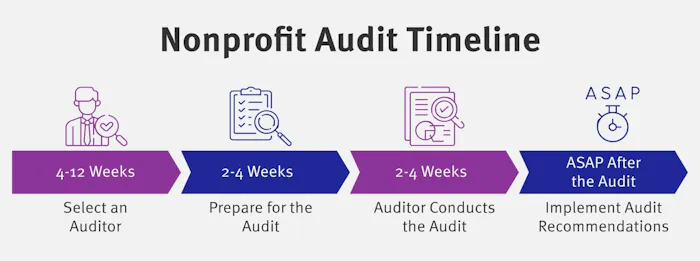
- Determining whether to conduct an audit: An outside expert is well-equipped to review your bylaws, federal and state funding, and upcoming grant applications to confirm if an independent audit is required for your nonprofit—or if it’s optional but still helpful for achieving your financial goals.
- Selecting an auditor: Outsourced accountants and financial advisors usually know their industries well and can recommend external auditors whose approach would align with your organization’s needs, plus they can assist with your request for proposals (RFP) and interview process.
- Preparing for your audit: In addition to performing a financial data hygiene check (which you should do even if you know your records aren’t significantly behind), your outsourced partner will also compile the documents on your auditor’s Provided by Client (PBC) list.
- Implementing audit recommendations: No matter how far from perfect your audit report might appear, third-party input can help put your results into perspective, identify which fixes are most important to focus on, and make those changes to your operations.
The one aspect of independent auditing that most outsourced accounting firms (including Jitasa) won’t do is actually conducting your audit in order to prevent a conflict of interest. But anything that happens before or after an audit is fair game for outside assistance.
Dive Deeper Into Navigating a “Bad” Audit Report
How do we switch nonprofit financial service providers without disrupting our daily operations?
Maybe your nonprofit has handled its finances in-house so far, but your situation is becoming too complicated for a part-time team member or volunteer to manage effectively. Or, maybe your organization tried partnering with an outsourced provider, but you’ve chosen not to renew your contract with them after realizing that firm wasn’t the best fit.
Either way, you need to find a new financial service provider who will:
- Develop a structured onboarding process involving lots of communication with existing staff to fully understand your situation before they develop solutions that meet your needs.
- Manage any data migrations that may need to happen—e.g., if you’re getting started with an accounting solution for the first time or switching to a different one where the subscription cost is included in your new provider’s services.
- Dive right into routine activities to keep functions like payroll, bill and vendor payments, and donation receipt distribution running without interruption.
If you have advance knowledge about your need to choose a new provider, start your search as early as possible so the transition can be seamless once you select a partner.
What financial compliance requirements does my nonprofit need to follow?
There are many unique compliance requirements for nonprofits like yours due to your tax-exempt status, and keeping track of them all can be challenging. A few of the biggest ones to keep in mind include:
- The Generally Accepted Accounting Principles (GAAP): This set of guidelines standardizes financial reporting across all sectors—both for-profit and nonprofit—to promote comparability and transparency.
- Form 990 filing: Even though your nonprofit is tax-exempt, you still have to file an annual tax return on time every year to prove to the IRS that you deserve to maintain your status.
- Funding allocation expectations: All of your organization’s funding needs to be reinvested into itself (either saved or spent—not distributed to owners or investors), and more of your spending should be tied to mission-critical programming than overhead so supporters know they’re truly making a difference for the cause they want to support.
- Restricted fund tracking: If revenue is designated for a specific initiative, your nonprofit has to use it for that purpose or else risk IRS penalties or donor lawsuits, making it essential to monitor and spend this funding carefully.
An outsourced accounting partner can navigate all of these compliance processes for you, from filing the correct Form 990 version on your behalf to producing reports that align with GAAP standards and demonstrate the proper expense and restricted fund management they’ve set up for you.
However, these compliance requirements are why it’s important to choose an outsourcing firm that specializes in nonprofit work, so they know how to deal with them from experience. And it’s even better to find a firm that has worked with other nonprofits in your vertical, since they’ll understand any additional regulations or procedures that apply to your specific organization (e.g., HIPAA compliance for healthcare organizations or multi-chapter accounting for federated youth development nonprofits).
Explore Jitasa’s Client Verticals
How can my nonprofit manage the grant lifecycle more effectively?
Grant management is among the most complex processes nonprofits navigate. From identifying opportunities and writing proposals to progress tracking, recordkeeping, and reporting, it takes a lot of time and effort to secure this type of critical funding for your mission.
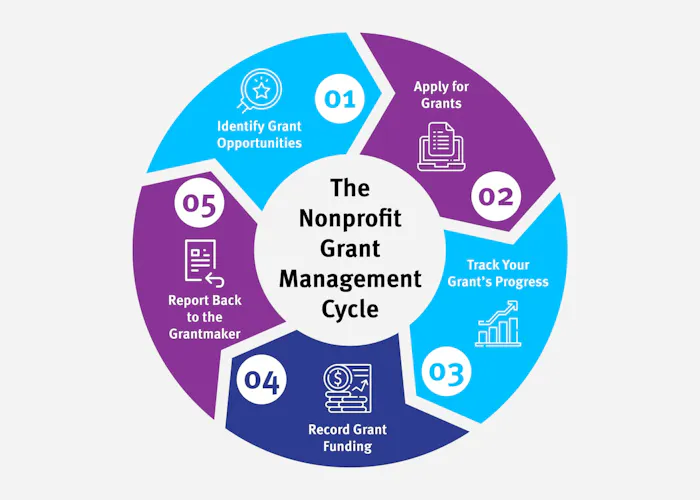
Outsourced financial partners don’t typically seek out grants or write full grant applications for your nonprofit (although there are plenty of services and tools available to leverage in that process). What they will do is support you across all finance-related grant management activities, including:
- Providing advice on whether a grant opportunity is feasible and worthwhile for your nonprofit to apply for.
- Developing grant proposal budgets that you’ll be able to stick to if you secure funding.
- Gathering any proof of fiscal responsibility a grantmaker asks for alongside applications, such as recent financial statements, Form 990s, or an audit report.
- Setting up and entering data into a post-award tracking system.
- Correctly recognizing grant revenue in your accounting records, factoring in funder restrictions and conditions.
- Creating financial reports that align with grantmakers’ requirements.
Many nonprofits have come to us with one or more of the above challenges since we got our start in 2008, and our team at Jitasa has helped these organizations not only fix those issues, but also create a more sustainable financial model overall. We’ve served more than 2,000 nonprofits, and 92% of our clients stick with us from year to year. Will your organization be next to join these numbers?
If you’d like more information about nonprofit financial services first, check out these resources:
- Working With a Nonprofit Accountant: What to Expect. Dive deeper into what a nonprofit accountant does and how outsourcing compares to other options for hiring one.
- 12+ Top Nonprofit Accounting Firms & How to Choose One. Explore our full list of the best nonprofit accounting firms so you can choose the right partner for your organization.
- What Is a Fractional CFO for Nonprofits? The Ultimate Guide. Learn more about the role of a fractional CFO to help you decide whether you need that type of financial support.
See how Jitasa’s affordable, tailored bookkeeping and accounting services can work for your nonprofit.
Request a Quote